
Bridging abstract to concrete: The SPLDV board as an innovative tool for teaching systems of linear equations
DOI:
https://doi.org/10.59965/pijme.v3i2.260Keywords:
Algebraic problem-solving, Linear equations, Manipulative tools, Mathematics pedagogy, Visual learning aidsAbstract
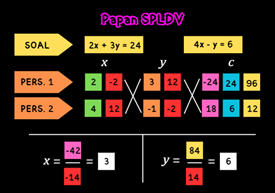
This qualitative case study examines the effectiveness of the SPLDV Board, a color-coded manipulative tool, in teaching systems of linear equations with two variables to 37 mathematics education students. Through inquiry-based instruction and systematic questioning, the study analyzed students' conceptual understanding, procedural fluency, and engagement patterns. Results demonstrated that the SPLDV Board's visual scaffolding significantly improved students' ability to identify coefficients, execute cross-multiplication procedures, and understand underlying mathematical structures, with all participants achieving fluent responses to guiding questions. However, limitations emerged: the tool only works for systems with unique solutions and some students remained passive during instruction. Findings provide practical guidance for developing accessible manipulative materials that support both procedural and conceptual learning in algebra, with design principles transferable to other mathematical topics requiring multi-step problem-solving.
Downloads
References
Adlini, M. N., Dinda, A. H., Yulinda, S., Chotimah, O., & Merliyana, S. J. (2022). Metode penelitian kualitatif studi pustaka. Edumaspul: Jurnal Pendidikan, 6(1), 974-980. https://doi.org/10.33487/edumaspul.v6i1.3395
Agustini, D., & Pujiastuti, H. (2020). Analisis kesulitan siswa berdasarkan kemampuan pemahaman matematis dalam menyelesaikan soal cerita pada materi SPLDV. Media Pendidikan Matematika, 8(1), 18-27. https://doi.org/10.33394/mpm.v8i1.2568
Assyakurrohim, D., Ikhram, D., Sirodj, R. A., & Afgani, M. W. (2023). Metode studi kasus dalam penelitian kualitatif. Jurnal Pendidikan Sains dan Komputer, 3(1), 1-9. https://doi.org/10.47709/jpsk.v3i01.2209
Carbonneau, K. J., Marley, S. C., & Selig, J. P. (2013). A meta-analysis of the efficacy of teaching mathematics with concrete manipulatives. Journal of Educational Psychology, 105(2), 380-400. https://doi.org/10.1037/a0031084
Darmawan, P., & Yusuf, F. I. (2022). Teori kognitivisme dan penerapannya dalam penelitian pendidikan matematika. Insan Cendekia Nusantara.
Dzulkifli, M. A., & Mustafar, M. F. (2013). The influence of colour on memory performance: A review. The Malaysian Journal of Medical Sciences, 20(2), 3-9.
Ferdianto, F., & Yesino, L. (2019). Analisis kesalahan siswa dalam menyelesaikan soal pada materi SPLDV ditinjau dari indikator kemampuan matematis. SJME (Supremum Journal of Mathematics Education), 3(1), 28-38. https://doi.org/10.35706/sjme.v3i1.1784
Habibah, A., Nandang, N., & Sudirman, S. (2020). Identifikasi kesalahan-kesalahan siswa dalam menyelesaikan soal cerita pada materi sistem persamaan linear dua variabel berdasarkan prosedur newman. Range: jurnal pendidikan matematika, 1(2), 122-129.
Johnson, D. W., & Johnson, R. T. (2019). An educational psychology success story: Social interdependence theory and cooperative learning. Educational Researcher, 38(5), 365-379. https://doi.org/10.3102/0013189X09339057
Khasanah, L. U. (2022, March 4). Empat sumber data sekunder dan primer. DQLab. https://dqlab.id/empat-sumber-data-sekunder-dan-primer
Kusumastuti, A., & Khoiron, A. M. (2019). Metode penelitian kualitatif. Lembaga Pendidikan Sukarno Pressindo.
Lesh, R., & Doerr, H. M. (2003). Beyond constructivism: Models and modeling perspectives on mathematics problem solving, learning, and teaching. Lawrence Erlbaum Associates. https://doi.org/10.4324/9781410607713
Ministry of Education, Culture, Research, and Technology. (2022). Kurikulum Merdeka [Merdeka curriculum]. Government of Indonesia.
Moyer-Packenham, P. S., & Bolyard, J. J. (2016). Revisiting the definition of a virtual manipulative. In P. S. Moyer-Packenham (Ed.), International perspectives on teaching and learning mathematics with virtual manipulatives (pp. 3-23). Springer. https://doi.org/10.1007/978-3-319-32718-1_1
Monike, R. S., Sudirman, S., Kandaga, T., & Rodríguez-Nieto, C. A. (2025). Effectiveness of ChatGPT-integrated discovery learning on mathematical literacy in three-variable linear equation systems: A quasi-experimental study. International Journal of Didactic Mathematics in Distance Education, 3(1), 64–82. https://doi.org/10.33830/ijdmde.v3i1.13157
Nandang, N., Fitriyani, F., Gunadi, F., & Sudirman, S. (2022). Penggunaan algebraic experience materials terhadap hasil belajar siswa materi sistem persamaan linear dua variabel. Gema Wiralodra, 13(1), 273–284. https://doi.org/10.31943/gemawiralodra.v13i1.230
Nihayah, E. F. (2021). Analisis penguasaan materi prasyarat aljabar dalam menyelesaikan soal sistem persamaan linear dua variabel. Linear: Jurnal Ilmu Pendidikan, 5(1), 23-33. https://doi.org/10.53090/jlinear.v5i1.138
Oktifa, N. (2022). Kenali ciri-ciri siswa tidak paham pelajaran: Gejala-gejala anak yang berkesulitan belajar. Aku Pintar. https://akupintar.id/info-pintar/-/blogs/kenali-ciri-ciri-siswa-tidak-paham-pelajaran
Pradini, W., Muhsetyo, G., & Rahardjo, S. (2020). Kesulitan siswa SMP dalam menyelesaikan soal cerita sistem persamaan linear dua variabel. Jurnal Pendidikan: Teori, Penelitian, dan Pengembangan, 5(1), 31-38. http://dx.doi.org/10.17977/jptpp.v5i1.13107
Rismawati, M., Irawan, E. B., & Susanto, H. (2017). Struktur koneksi matematis siswa kelas X pada materi sistem persamaan linear dua variabel. Jurnal Pendidikan: Teori, Penelitian, dan Pengembangan, 2(4), 465-469. http://dx.doi.org/10.17977/jptpp.v2i4.8547
Riyadi, S. (2006). Sistem persamaan linear dua variabel (SPLDV). In Be smart matematika (p. 57). Grafindo Media Pratama.
Salma. (2023, September 15). Teknik analisis data: Pengertian, macam, dan langkah. Deepublish. https://penerbitdeepublish.com/teknik-analisis-data/
Simanullang, R., & Exaudi, M. (2020). Perbedaan pemahaman konsep matematis antara model pembelajaran kooperatif tipe TGT dengan model pembelajaran problem based learning pada materi sistem persamaan linear dua variabel kelas VIII SMP Swasta Bhakti Bangsa Sei Semayang [Unpublished thesis]. Universitas HKBP Nommensen.
Sudirman, S., Mellawaty, M., Yaniawati, P., & Indrawan, R. (2021). Augmented reality application: What are the constraints and perceptions of the students during the covid 19 pendemic’s 3D geometry learning process?. In Journal of Physics: Conference Series (Vol. 1783, No. 1, p. 012007). IOP Publishing.
Sudirman, S., Andrés Rodríguez-Nieto, C., Bongani Dhlamini, Z., Singh Chauhan, A., Baltaeva, U., Abubakar, A., O. Dejarlo, J., & Andriani, M. (2023). Ways of thinking 3D geometry: exploratory case study in junior high school students. Polyhedron International Journal in Mathematics Education, 1(1), 15–34. https://doi.org/10.59965/pijme.v1i1.5
Sweller, J., Ayres, P., & Kalyuga, S. (2011). Cognitive load theory. Springer. https://doi.org/10.1007/978-1-4419-8126-4
Vlassis, J. (2008). The role of mathematical symbols in the development of number conceptualization: The case of the minus sign. Philosophical Psychology, 21(4), 555-570. https://doi.org/10.1080/09515080802285552
Yumiati, Y., Rodriguez-Nieto, C.A., Bonyah, E., Sudirman, S & Haji, S. (2024). Evaluating Bengkulu culture’s role in mathematics learning outside classrooms for understanding measurement. International Journal of Evaluation and Research in Education, 13(6), 4307-4320. http://doi.org/10.11591/ijere.v13i6.30163
Zulaiha, S., Meldina, T., & Meisin. (2022). Problematika guru dalam menerapkan kurikulum merdeka belajar. TERAMPIL: Jurnal Pendidikan dan Pembelajaran Dasar, 9(2), 163-177. https://doi.org/10.24042/terampil.v9i2.13185
Downloads
Published
How to Cite
Issue
Section
License
Copyright (c) 2025 Chatra Arlinta Maurilla, Puguh Darmawan

This work is licensed under a Creative Commons Attribution-ShareAlike 4.0 International License.


