
Development and validation of ethnomathematics-based worksheets integrating Sundanese Pupuh for enhancing number pattern learning in Indonesian secondary schools
DOI:
https://doi.org/10.59965/pijme.v3i2.275Keywords:
Worksheet, Ethnomathematics, Pupuh, Number PatternsAbstract
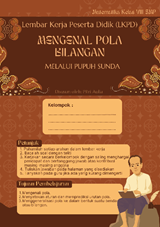
This study addresses the persistent challenge of low mathematical performance among Indonesian secondary students, particularly in learning number patterns, by developing culturally responsive teaching materials. Although Indonesia’s PISA performance has improved, students remain below the OECD average, with prior studies highlighting difficulties in pattern recognition, symbolic representation, and generalization. To address this issue, the study bridges abstract mathematical concepts with students’ cultural contexts through the development of ethnomathematics-based student worksheets integrating Sundanese Pupuh, a traditional literary art form characterized by structured numerical patterns in syllable counts and line arrangements. The research employed a Research and Development approach using the 4D model (Define, Design, Develop, Disseminate). The worksheets were designed to explicitly connect the inherent mathematical structures of Pupuh—guru wilangan and guru lagu—with formal number pattern concepts in the eighth-grade mathematics curriculum. The development process included needs analysis, alignment with Indonesia’s Merdeka Curriculum, and analysis of student characteristics. Expert validation conducted by mathematics education lecturers and prospective teachers resulted in a combined validity score of 90%, categorized as very valid. Practicality testing with eighth-grade students yielded a score of 92.6%, indicating high usability. This study contributes to mathematics education in three key ways: (1) introducing a novel pedagogical use of indigenous cultural heritage to support abstract mathematical learning, (2) providing empirically validated culturally responsive worksheets that address specific difficulties in number pattern learning, and (3) offering a replicable framework for integrating ethnomathematics into formal curricula. The findings suggest that culturally grounded instruction can enhance student engagement and conceptual understanding, with potential application to other cultural contexts.
Downloads
References
Ardiyanti, B., Choirudin, C., & Ningsih, E. F. (2024). Etnomatematika bangunan pionering pramuka terhadap minat dan kreativitas siswa. Jurnal Penelitian Tindakan Kelas, 1(3), 156–161. https://doi.org/10.61650/jptk.v1i3.509
Asma, A. (2023). Development of an ethnic-math HOTS-Based assessment instrument to measure students’ numerical literacy. Journal of Innovation in Educational and Cultural Research, 4(4), 691–699. https://doi.org/10.46843/jiecr.v4i4.909
Bantaika, A., Son, A. L., Ndapa Deda, Y., & Garcia-Garcia, J. (2025). Mathematical concepts and cultural values in guest reception traditions: an ethnomathematic study of the Dawan Tribe Community on The Timor Island. International Journal of Didactic Mathematics in Distance Education, 2(1), 32–44. https://doi.org/10.33830/ijdmde.v2i1.9702
Bela, M. E., & Wewe, M. (2024). Integrating ethnomathematics into a transformation geometry module to enhance self-efficacy. Al-Jabar : Jurnal Pendidikan Matematika, 15(2), 547. https://doi.org/10.24042/ajpm.v15i2.24564
Chrisnawati, Y., & Pratama, F. W. (2023). Analisis kesulitan peserta didik kelas VIII dalam belajar pola bilangan. Jurnal Pendidikan Matematika Undiksha, 14(2), 117–127. https://doi.org/10.23887/jjpm.v14i2.61266
D’Ambrosio, U. (2001). In my opinion: what is ethnomathematics, and how can it help children in schools? Teaching Children Mathematics, 7(6), 308–310. https://doi.org/10.5951/TCM.7.6.0308
Dahoklory, A. S. K., Laurens, T., & Palinussa, A. L. (2023). Development of learning devices based on ethnomathematics of the Meher Tribe Woven Fabrics (Kisar Island) with realistic mathematics education approach on number pattern material. Jurnal Pendidikan Matematika (JUPITEK), 6(2), 82–92. https://doi.org/10.30598/jupitekvol6iss2pp82-92
Dhiki, Y. Y., & Bantas, M. G. D. (2021). Eksplorasi Etnomatematika Sebagai Sumber Belajar Matematika Di Kabupaten Ende. AKSIOMA: Jurnal Program Studi Pendidikan Matematika, 10(4), 2698. https://doi.org/10.24127/ajpm.v10i4.4254
Dinta, A., Luthfi, A., & Wahyuni, M. (2023). Media pembelajaran matematika berbasis chatbot untuk kemampuan pemahaman konsep pola bilangan siswa. Journal of Education Research, 4(4), 2385–2392. https://doi.org/https://doi.org/10.37985/jer.v4i4.633
Fairuz, F. R., Fajriah, N., & Danaryanti, A. (2020). Pengembangan LKS materi pola bilangan berbasis etnomatematika sasirangan di kelas VIII sekolah menengah pertama. EDU-MAT: Jurnal Pendidikan Matematika, 8(1). https://doi.org/10.20527/edumat.v8i1.8343
Faqih, A., Nurdiawan, O., & Setiawan, A. (2021). Pengembangan Media pembelajaran Multimedia Interaktif Alat Masak Tradisional Berbasis Etnomatematika. Mosharafa: Jurnal Pendidikan Matematika, 10(2), 301–310. https://doi.org/10.31980/mosharafa.v10i2.663
Gunawan, F., Septian, A., & Sugiarni, R. (2023). Analisis Kemampuan Representasi Matematis Ditinjau dari Gaya Kognitif. Intellectual Mathematics Education (IME), 1(2), 67–78. https://doi.org/10.59108/ime.v1i2.49
Haerudin, D., Hermawan, B., Ruhaliah, R., Wibawa, S., Awaliah, Y. R., & Hardini, T. I. (2023). Inventorying authentic teaching materials on Youtube for listening learning plan of Pupuh in elementary school. Jurnal Cakrawala Pendidikan, 42(2). https://doi.org/10.21831/cp.v42i2.46233
Hartindya, R. P., Sunardi, S., & Yuliati, N. (2022). Pengembangan Perangkat Pembelajaran Berorientasi Etnomatematika Batik Nusantara Materi Transformasi Geometri Terhadap Keterampilan Berpikir Tingkat Tinggi. AKSIOMA: Jurnal Program Studi Pendidikan Matematika, 11(3), 2257. https://doi.org/10.24127/ajpm.v11i3.5775
Iskandar, R. S. F., Darhim, D., Dahlan, J. A., & Jupri, A. (2025). Student’s Learning Difficulties on Mathematical Understanding of a Number Pattern. AKSIOMA: Jurnal Program Studi Pendidikan Matematika, 14(1), 199–210. https://doi.org/https://doi.org/10.24127/ajpm.v14i1.9677
Kemdikbud. (2024). Rapor Pendidikan Indonesia 2024. https://pusatinformasi.raporpendidikan.kemdikbud.go.id/hc/en-us/articles/6545029651609-Tentang-Rapor-Pendidikan-dan-Rapor-Mutu
Kemendikdasmen. (2025). Pembelajaran mendalam. https://bpmpkaltara.kemdikbud.go.id/wp-content/uploads/2025/02/nasmik-deep-learning-2025-full_10-feb.pdf
Khairunnisa, I. A., Mairing, J. P., Sudirman, S., & Rodríguez-Nieto, C. A. (2025). Integrating cultural contexts into mathematics: effects of culture-based worksheets on students’ mastery of geometric transformations. Polyhedron International Journal in Mathematics Education, 3(1), 1–10. https://doi.org/10.59965/pijme.v3i1.167
Mania, S., Nur, F., & Amin, B. (2024). Development of Ethnomathematics-Based Mathematical Teaching Materials at the Makassar 99 Kubah Mosque in Facilitating Student Learning Independence. Kreano, Jurnal Matematika Kreatif-Inovatif, 15(1), 123–135. https://doi.org/https://doi.org/10.15294/r9qd9r26
Maula, N. F., Suryadi, D., & Jupri, A. (2024). Learning obstacles in the generalization process: In case number pattern topic. Research and Development in Education (RaDEn), 4(2), 964–976. https://doi.org/10.22219/raden.v4i2.36342
Mursalina, D., Marhamah, M., & Retta, A. M. (2021). Development students worksheet using ethnomathematics-based CTL approach on SLETV subject material for grade X. Kreano, Jurnal Matematika Kreatif-Inovatif, 12(1), 118–129. https://doi.org/10.15294/kreano.v12i1.28584
OECD. (2023). PISA 2022 Results: Factsheets – Indonesia. https://www.oecd.org/en/publications/pisa-2022-results-volume-i-and-ii-country-notes_ed6fbcc5-en/indonesia_c2e1ae0e-en.html
Pakabu, K. T. S., Sudirman, S., Kandaga,. T., Rodríguez-Nieto, C. A., & Dejarlo, J. O. (2024). Developing Papuan cultural contextual E-Module learning devices in linear programs to improve students’ mathematical problem-solving skills. International Journal of Mathematics and Sciences Education, 2(1), 25–42. https://doi.org/10.59965/ijmsed.v2i1.107
Prasetyo, P. W., & Atsila, K. S. (2022). Developing problem-based learning electronic student worksheet for number pattern topic. Bulletin of Applied Mathematics and Mathematics Education, 2(2), 79–86. https://doi.org/10.12928/bamme.v2i2.6813
Prasetya, N., Gorky Sembiring, M., Sudirman, S., & Rodríguez-Nieto, C. A. (2025). Visualizing geometry: exploring the role of geogebra-assisted 6E-IM model in enhancing students’ spatial abilities. International Journal of Mathematics and Sciences Education, 3(1), 1–12. https://doi.org/10.59965/ijmsed.v3i1.176
Putri, A. R. H., Wiryanto, W., Ekawati, R., & Srinivasarao, U. (2024). The implementation of ethnomathematics-based student worksheet “Surya Majapahit” on the circle elements material to build creative thinking of elementary students. IJORER : International Journal of Recent Educational Research, 5(6), 1522–1541. https://doi.org/10.46245/ijorer.v5i6.712
Setiyadi, D., Munjaji, I., & Naimah, N. (2022). Pengembangan bahan ajar bernuansa etnomatematika pada tingkat sekolah dasar dengan satuan hitung tidak baku khas Banyumas. Jurnal Eduscience, 9(1), 227–234. https://doi.org/10.36987/jes.v9i1.2571
Setiyaningrum, N., & Sari, C. K. (2023). LKS berbasis problem based learning: upaya mendukung peningkatan kemampuan berpikir kritis pada materi pola bilangan. AKSIOMA: Jurnal Program Studi Pendidikan Matematika, 12(1), 202. https://doi.org/10.24127/ajpm.v12i1.5819
Setyorini, A. I., Saefudin, A. A., & Haryanto, H. (2020). Pengembangan lembar kerja siswa menggunakan pendekatan saintifik pada materi pola bilangan. AKSIOMA: Jurnal Program Studi Pendidikan Matematika, 9(4), 1260. https://doi.org/10.24127/ajpm.v9i4.3054
Sugiarni, R., Herman, T., Septian, A., Fazrianto Suwarman, R., & Inayah, S. (2023). Analysis of errors and difficulties on numeracy ability students in the new normal era. AIP Conference Proceeding, 030032. https://doi.org/10.1063/5.0140355
Sugiarni, R., Herman, T., Suryadi, D., Prabawanto, S., & Zulnaidi, H. (2023). Ethnomathematics study of Pandanwangi village. Union: Jurnal Ilmiah Pendidikan Matematika, 11(2), 260–274. https://doi.org/10.30738/union.v11i2.14614
Sugiarni, R., Mulya, D., Putri, V., & Zahira Shofa, G. (2023). Pengembangan lembar kerja peserta didik (LKS) interaktif berbasis live worksheet pada materi eksponen. Sigma Didaktika: Jurnal Pendidikan Matematika, 11(2), 117–127. https://doi.org/10.17509/sigmadidaktika.v11i2.60003
Sudirman, S., Rodríguez-Nieto, C. A. ., & Bonyah, E. (2024). Integrating ethnomathematics and ethnomodeling in Institutionalization of school mathematics concepts: A study of fishermen community activities. Journal on Mathematics Education, 15(3), 835–858. https://doi.org/10.22342/jme.v15i3.pp835-858
Sudirman, S., Andrés Rodríguez-Nieto, C., Dani Prasetyo Adi, P., Bukhori Muslim, A., Faizah, S., Dwi Susandi, A., & SaDijah, C. (2025). Contextualising AR digital module instruction as artifacts in 3D geometry: a didactical tetrahedron action research. International Journal of Mathematical Education in Science and Technology, 1-27. https://doi.org/10.1080/0020739X.2025.2530957
Sudirman, S., Belbase, S., Rodríguez-Nieto, C. A., Muslim, A. B., & Faizah, S. (2025). Personalization of interactive teaching materials supported by augmented reality: Potentials vs obstacles in 3D geometry learning. Journal of Curriculum Studies Research, 7(1), 152-178. https://doi.org/10.46303/jcsr.2025.8
Sumandya, I. W., & Widana, I. W. (2022). Reconstruction of vocational-based mathematics teaching materials using a smartphone. Journal of Education Technology, 6(1), 133–139. https://doi.org/10.23887/jet.v6i1.42833
Susanti, O., Yanto, Y., & Luthfiana, M. (2024). Systematic literature review: lembar kerja peserta didik (LKPD) berbasis etnomatematika. Journal of Mathematics Science and Education, 6(2), 45-67. https://doi.org/https://doi.org/10.31540/jmse.v6i2.3374
Suwito, R. W., Sa’dijah, C., & Qohar, A. (2023). Implementasi media komik matematika digital dalam pembelajaran pola barisan bilangan. JOHME: Journal of Holistic Mathematics Education, 7(2), 227. https://doi.org/10.19166/johme.v7i2.7621
Wiguna, I. K. W., & Tristaningrat, M. A. N. (2022). Langkah Mempercepat Perkembangan Kurikulum Merdeka Belajar. Edukasi: Jurnal Pendidikan Dasar, 3(1), 17. https://doi.org/10.55115/edukasi.v3i1.2296
Zaslavsky, C. (1991). World Cultures in the Mathematics Class. For the Learning of Mathematics, 11(2), 32–36
Downloads
Published
How to Cite
Issue
Section
License
Copyright (c) 2025 Pitri Aulia Aulia, Rani Sugiarni, Camilo Andrés Rodríguez-Nieto

This work is licensed under a Creative Commons Attribution-ShareAlike 4.0 International License.


