


Vol. 3 No. 2 (2025): Ijmsed
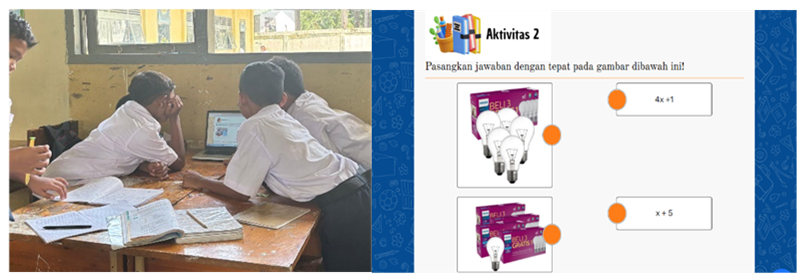
This issue consists of 5 articles written by authors from 3 countries (Indonesia, Ghana, and Colombia) representing diverse affiliations and scholarly backgrounds. The Volume 3, Issue 2 of the International Journal of Mathematics and Science Education in Distance Learning presents a rich collection of studies spanning elementary education, mathematics education, science education, and educational technology, with a strong emphasis on conceptual understanding, instructional design, and innovative learning media. Wardani et al. introduce an augmented reality–based snakes and ladders game designed to promote learning to live together in elementary schools, demonstrating how game-based AR media can foster social values and collaborative learning. Addo compares the structured ADDIE instructional design model with differentiated instruction in genetics education, revealing important implications for improving students’ learning outcomes in complex biological concepts. Ernamasari examines elementary students’ conceptual understanding and misconceptions of the human digestive system using a four-tier diagnostic test, providing detailed insights into common learning difficulties and sources of misunderstanding. Rauhun et al. conduct a phenomenological study exploring low conceptual understanding in mathematical story problem-solving among Indonesian junior high school students, highlighting cognitive and contextual challenges faced by learners. Finally, Suryawati et al. investigate the effectiveness of problem-based learning supported by Wizer.me in SDG 12–contextualized mathematics instruction, showing how sustainability contexts can meaningfully bridge algebra learning with real-world issues. Collectively, these articles contribute valuable perspectives on innovative pedagogy, diagnostic assessment, and the integration of technology and sustainability in contemporary mathematics and science education.


