
How is telegram virtual teaching assistant for math lessons? A Systematic Literature Review
DOI:
https://doi.org/10.59965/ijmsed.v2i1.90Keywords:
Telegram, Virtual Teaching, Teaching asisstant, BOT, PRISMA, Sytematic Literature RiviewAbstract
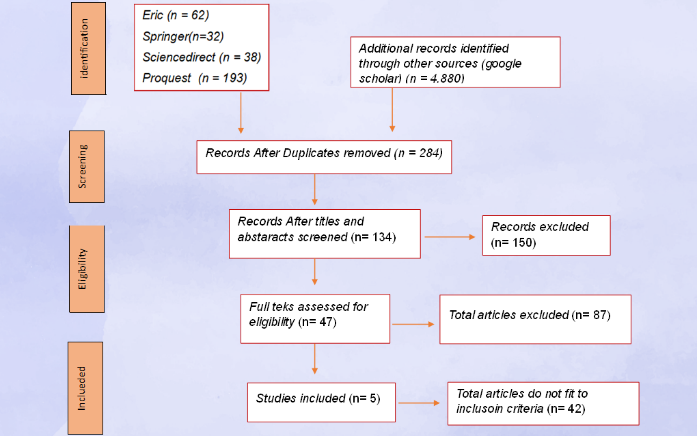
Telegram has significant potential as a virtual teaching tool in mathematics education due to its various advantages over other applications. This study aims to identify, review, and evaluate relevant research on the use of Telegram in mathematics learning, using the Systematic Literature Review (SLR) method. The process involves several stages: a) problem formulation, where the researchers define the problem to be explored in depth based on the selected topic, and b) applying the PRISMA approach for article screening. The initial search yielded 5,205 relevant articles. The findings indicate that Telegram users can leverage various advanced features to support their daily activities, including in education. One standout feature is Telegram BOT, which has been proven to effectively respond to user queries and commands, as shown in the study by Soeroso, Afrianto, Mayangsari, and Taali (2017). The implications of this research suggest that Telegram holds great potential as an interactive learning tool, particularly in supporting virtual mathematics instruction. Furthermore, Telegram's adaptability and ease of use make it an accessible option for teachers and students. Future studies are encouraged to explore its integration with other educational technologies to enhance learning outcomes.
References
Aghajani, M., & Adloo, M. (2018). The Effect of Online Cooperative Learning on Students' Writing Skills and Attitudes through Telegram Application. International Journal of Instruction, 11(3), 433-448. https://doi.org/10.12973/iji.2018.11330a
Alhabib, T. J., Cahyani, I., & Saadie, M. (2020). Utilization of Telegram media in learning to write short stories. International Language Check.
Atweh, B., Kaur, B., Nivera, G., Abadi, A., & Thinwiangthong, S. (2023). Futures for post-pandemic mathematics teacher education: Responsiveness and responsibility in the face of a crisis. ZDM–Mathematics Education, 55(1), 65–77. https://doi.org/10.1007/s11858-022-00541-8
Brown, A. L., & Campione, J. C. (2013). Interactive learning environments and the teaching of science and mathematics. In Toward a scientific practice of science education (pp. 111–139). Routledge.
Febriyanti, Chatarina, & Irawan, Ari. (2017). Meningkatkan kemampuan pemecahan masalah dengan Pembelajaran Matematika Realistik. Delta-Pi: Jurnal Matematika dan Pendidikan Matematika, 6(1), 31–41. https://doi.org/http://dx.doi.org/10.33387/dpi.v6i1.350
Findell, B., Swafford, J., & Kilpatrick, J. (Eds.). (2001). Adding it up: Helping children learn mathematics. National Academies Press.
González, M. Á. C., Sedano, F. J. R., García, Á. H., Fernández, A. G., & Higueras, Á. M. G. (2021). Your teammate just sent you a new message: The effects of using Telegram on individual acquisition of teamwork competence. International Journal of Interactive Mobile Technologies, 6(6), 225–233. https://doi.org/10.3991/ijimai.v6i6.2041
Hirzan, A. M., Surono, S., & Setiarso, G. (2024). Asisten kelas interaktif Moodle berbasis Internet of Things dan Telegram BOT. Jurnal Informatika dan Teknik Elektro Terapan, 12(1), 506-515. http://dx.doi.org/10.23960/jitet.v12i1.3833
Iqbal, A. K. (2020). Telegram as a tool to supplement online medical education during the COVID-19 crisis. Acta Informatica Medica, 28(2):94-105. https://doi.org/10.5455/aim.2020.28.94-97
Lee, K., Tsai, P. S., Chai, C. S., & Koh, J. H. L. (2014). Students' perceptions of self‐directed learning and collaborative learning with and without technology. Journal of Computer Assisted Learning, 30(5), 425–437. https://doi.org/10.1111/jcal.12072
Lubashevsky, I., & Lubashevsky, I. (2017). Modeling of human behavior as an individual branch of physics and mathematics. Physics of the Human Mind. https://doi.org/10.1007/978-3-319-51706-3_1
Marpaung, J. (2018). Pengaruh penggunaan Gadget dalam kehidupan. KOPASTA: Journal of the Counseling Guidance Study Program, 5(2), 55-64. https://doi.org/10.33373/kop.v5i2.1521
Mashadi, H.D & Kaviani, M. (2016). The social impact of Telegram as a social network on teaching English vocabulary among Iranian intermediate EFL learners. Sociological Studies of Youth, 7(23), 65-76. https://sid.ir/paper/690564/en
Mukuka, A., Shumba, O., & Mulenga, H. M. (2021). Students’ experiences with remote learning during the COVID-19 school closure: Implications for mathematics education. Heliyon, 7(7), e07676. https://doi.org/10.1016/j.heliyon.2021.e07676
Parlika, R., Miftakhoneki, S., Fernanda, R. A., Ramadhan, F. D., & Andry S, F. (2020). Program menghitung rumus bangun datar dan bangun ruang menggunakan fasilitas BOT Telegram. Scan: Jurnal Teknologi Informasi dan Komunikasi, 15(1), 50-58. https://doi.org/10.33005/scan.v15i1.1853
Sari, N., Amnur, H., & Hidayat, R. (2020). Monitoring next cloud as private cloud storage with Telegram notifications. JITSI: Jurnal Ilmiah Teknologi Sistem Informasi, 1(4), 144 - 149. Retrieved from https://jurnal-itsi.org/index.php/jitsi/article/view/21
Soeroso, H., Arfianto, A. Z., Mayangsari, N. E., & Taali, M. (2017, December). Penggunaan Bot Telegram Sebagai Announcement System pada Intansi Pendidikan. In Seminar Master PPNS (Vol. 2, No. 1, pp. 45-48).
Suhartono, E. (2017). Systematic Literatur Review (SLR): Metode, manfaat, dan tantangan learning analytics dengan metode data mining di dunia pendidikan tinggi. Jurnal Ilmiah INFOKAM, 13(1), https://doi.org/10.53845/infokam.v13i1.123
Widiyono, A. (2021). Penthe garuh penggunaan LMS dan aplikasi telegram terhadap aktivitas belajar. Jurnal Penelitian Ilmu Pendidikan, 14(1), 91-101. https://doi.org/10.21831/jpipfip.v14i1.37857
Wiranegara, D. A., & Hairi, S. (2020). Conducting English learning activities by implementing Telegram group class during COVID-19 pandemic. Journal of English for Academic and Specific Purposes (JEASP), 3(2), 104-114. https://doi.org/10.18860/jeasp.v3i2.11122
Downloads
Published
How to Cite
Issue
Section
License
Copyright (c) 2024 Ema Linda Wahyuni, Aprianah Puspa Sari Dewi; Moh. Rizal; Muhamad Galang Isnawan, Imam Fakhrurrozi

This work is licensed under a Creative Commons Attribution-ShareAlike 4.0 International License.


