Project-based learning integrated with local wisdom: Developing a trigonometry teaching module to enhance hots of senior secondary students in Merangin Regency
DOI:
https://doi.org/10.59965/pij.v4i1.301Keywords:
ADDIE model, Higher Order Thinking Skills (HOTS), local wisdom, Project-Based Learning (PjBL), trigonometry moduleAbstract
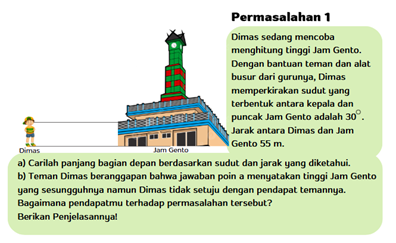
This study developed and evaluated a trigonometry teaching module grounded in Project-Based Learning (PjBL) integrated with local wisdom from Merangin Regency, Indonesia, using the ADDIE development model. Needs analysis across three state senior secondary schools revealed that 80.2% of students found trigonometry difficult and 71.1% perceived mathematics as disconnected from daily life. The module, designed for tenth-grade students (Phase E) and aligned with Indonesia’s Merdeka Belajar curriculum, embedded the six-step PjBL syntax within contextual activities centred on the Tugu Pedang and Jam Gento—culturally iconic landmarks in Merangin Regency. Expert validation by three mathematics teachers yielded an overall feasibility score of 4.47 (89.49%), placing the module in the Very Feasible category. Practicality testing during a small-group trial (two teachers; ten students) indicated Very Practical ratings from teachers and Practical to Very Practical ratings from students across all assessed aspects. Large-group effectiveness testing employed a quasi-experimental non-equivalent comparison group design (n = 35 per class). The experimental class achieved a mean posttest Higher Order Thinking Skills (HOTS) score of 83.69 versus 65.45 in the control class, with classical mastery rates of 91.43% and 2.86% respectively. An independent-sample t-test confirmed a significant difference (Sig. = 0.000 < 0.05). These findings establish that the developed module is valid, practical, and effective, offering a replicable model for contextualising abstract mathematics through local cultural integration within project-based instructional frameworks. These findings are theoretically grounded in Project-Based Learning theory (Thomas, 2000) and Bloom’s revised taxonomy for HOTS (Anderson & Krathwohl, 2001), and are directed at tenth-grade (Phase E) students within Indonesia’s Merdeka Belajar curriculum framework.
Downloads
References
Addo, C. K. (2025). Instructional design approaches in genetics education: ADDIE versus differentiated instruction. International Journal of Mathematics and Sciences Education, 3(2), 71–83. https://doi.org/10.59965/ijmsed.v3i2.268
Aldoobie, N. (2015). ADDIE model. American International Journal of Contemporary Research, 5(6), 68–72.
Amalia, I., Akbar, P., Afrilianto, M., & Bhakti, T. B. (2023). Project-Based Learning to develop Higher Order Thinking Skills (HOTS). Indonesian Journal of Learning Education and Counseling, 5(2), 138–147. https://doi.org/10.31960/ijolec.v5i2.2248
Anderson, L. W., & Krathwohl, D. R. (2001). A taxonomy for learning, teaching, and assessing: A revision of Bloom's taxonomy of educational objectives. Longman.
Ananta, S. F. (2022). Understanding the role of teachers in the 21st century and the challenges of learning. Jurnal Universitas Lambung Mangkurat. https://doi.org/10.20527/jk.v1i1.3890
Anizar, A. M., Maulyda, M. A., & Gunawan, G. (2021). Development of ethnomathematics-based trigonometry student worksheets at the Cheng-Ho Mosque in Jember Regency. Buana Matematika, 11(1), 1–14. https://doi.org/10.36456/buanamatematika.v11i1.3126
Aulia, P., Sugiarni, R., & Rodríguez-Nieto, C. A. (2025). Development and validation of ethnomathematics-based worksheets integrating Sundanese Pupuh for enhancing number pattern learning in Indonesian secondary schools. Polyhedron International Journal in Mathematics Education, 3(2), 139–152. https://doi.org/10.59965/pijme.v3i2.275
Bell, S. (2010). Project-based learning for the 21st century: Skills for the future. The Clearing House, 83(2), 39–43. https://doi.org/10.1080/00098650903505415
Borg, W. R., & Gall, M. D. (1983). Educational research: An introduction (4th ed.). Longman.
Branch, R. M. (2009). Instructional design: The ADDIE approach. Springer. https://doi.org/10.1007/978-0-387-09506-6
Brookhart, S. M. (2010). How to assess higher-order thinking skills in your classroom. ASCD.
Cahyani, N. M. W. S. (2022). EFL teacher's online learning activities: An analysis of teachers' creativity and insertion of HOTS in SMA N 1 Kuta Selatan [Thesis, Ganesha University of Education].
Chuseri, A., & Anjarini, T. (2021). Development of a realistic mathematics module based on integrated HOTS on the material of spatial buildings. Alifmatika: Journal of Mathematics Education and Learning, 3(1), 17–28. https://doi.org/10.35316/alifmatika.2021.v3i1.17-28
Dalman, R. P., & Junaidi. (2022). Reasons why students have difficulty answering HOTS questions in sociology learning. Naradidik, 1(1), 33–45. https://doi.org/10.24036/naradidik.v1i1.83
D'Ambrosio, U. (1985). Ethnomathematics and its place in the history and pedagogy of mathematics. For the Learning of Mathematics, 5(1), 44–48.
Darmawan, P., Salsabiila, A. S., & Olivero-Acuña, R. R. (2025). PAPUTRI (Trigonometric Rotating Board) as an innovation to enhance mathematics learning in trigonometry. Panicgogy International Journal, 3(2), 39–53. https://doi.org/10.59965/pij.v3i2.170
Hmelo-Silver, C. E. (2004). Problem-based learning: What and how do students learn? Educational Psychology Review, 16(3), 235–266. https://doi.org/10.1023/B:EDPR.0000034022.16470.f3
Hsieh, H. F., & Shannon, S. E. (2005). Three approaches to qualitative content analysis. Qualitative Health Research, 15(9), 1277–1288. https://doi.org/10.1177/1049732305276687
Ikhwanudin, T. (2018). Local wisdom-based learning to build national character. UNION: Jurnal Pendidikan Matematika, 6(1), 39–48. https://doi.org/10.30738/union.v6i1.1953
Isharyadi, R., Kusumah, Y. S., Nurjanah, N., & Martadiputra, B. A. P. (2026). Integrating markerless augmented reality into project-based learning to foster spatial reasoning and self-regulated learning in junior high school: A formative evaluation. International Journal of Didactic Mathematics in Distance Education, 3(1), 106–118. https://jurnal.ut.ac.id/index.php/ijdmde/article/view/13945
Jatisunda, M. G., Nahdi, D. S., & Ujiati, U. (2019). Students' difficulties in understanding trigonometry concepts seen from learning obstacles. Journal of Didactic Mathematics, 2(1), 9–16. https://doi.org/10.34007/jdm.v2i1.368
Jayanti, A. D., & Yunianta, T. N. H. (2022). Development of Emometri (trigonometry e-module) with STEAM-based Project-Based Learning. AKSIOMA: Journal of Mathematics Education Study Program, 11(2), 1116–1129. https://doi.org/10.24127/ajpm.v11i2.5126
Johnson, E. B. (2014). Contextual teaching and learning: Menjadikan kegiatan belajar mengajar mengasyikkan dan bermakna. Kaifa.
Kemdikbudristek. (2022). Guide to developing independent curriculum teaching modules. Kemdikbudristek.
Kemdikbudristek. (2023). Laporan hasil Asesmen Nasional 2021–2023: Kompetensi numerasi peserta didik SMP/SMA. Pusat Asesmen Pendidikan.
King, F. J., Goodson, L., & Rohani, F. (2013). Higher order thinking skills: Definitions, strategies, assessment. Educational Services Program.
Koo, T. K., & Mae, M. Y. (2016). A guideline of selecting and reporting intraclass correlation coefficients for reliability research. Journal of Chiropractic Medicine, 15(2), 155–163. https://doi.org/10.1016/j.jcm.2016.02.012
Landis, J. R., & Koch, G. G. (1977). The measurement of observer agreement for categorical data. Biometrics, 33(1), 159–174. https://doi.org/10.2307/2529310
Mensah, F. K. (2017). Ghanaian senior high school students' difficulty in learning trigonometry. African Journal of Educational Studies in Mathematics and Sciences, 13, 1–10. https://doi.org/10.4314/ajesms.v13i0.1
Monike, R. S., Sudirman, S., Kandaga, T., & Rodríguez-Nieto, C. A. (2025). Effectiveness of ChatGPT-integrated discovery learning on mathematical literacy in three-variable linear equation systems: A quasi-experimental study. International Journal of Didactic Mathematics in Distance Education, 3(1), 64–82. https://doi.org/10.33830/ijdmde.v3i1.13157
Mulyati, S. M., Rawita, I. S., & Noviyanti, R. (2025). Adiwiyata Program Management at SDN 3 Muara Ciujung Timur: Governance, participation, and partnership. Panicgogy International Journal, 3(2), 54–63. https://doi.org/10.59965/pij.v3i2.282
Mustikaningsih, D., Yumiati, Y., & Sudirman, S. (2025). Enhancing mathematical communication and learning independence through learning cycle 6E model with dynamic geometry software: A study of vocational high school students. Polyhedron International Journal in Mathematics Education, 3(2), 67–85. https://doi.org/10.59965/pijme.v3i2.262
NCTM. (2014). Principles to actions: Ensuring mathematical success for all. National Council of Teachers of Mathematics.
Nieveen, N. (1999). Prototyping to reach product quality. In J. van den Akker, R. Branch, K. Gustafson, N. Nieveen, & T. Plomp (Eds.), Design approaches and tools in education and training (pp. 125–135). Kluwer. https://doi.org/10.1007/978-94-011-4255-7_10
Novalia, H., & Noer, S. H. (2019). Development of mathematics learning modules with PQ4R strategy. UNTIRTA Mathematics Development Research Journal, 12(1), 117–126. https://doi.org/10.35964/innovation.v12i1.234
Novianti, R., Roza, Y., & Maimunah, M. (2021). Students' conceptual difficulties in trigonometry: A literature review. Jurnal Pendidikan Matematika, 15(2), 147–158. https://doi.org/10.22342/jpm.15.2.12889.147-158
Nurafni, A., Pujiastuti, H., & Mutaqin, A. (2020). Development of trigonometry teaching materials based on local wisdom. Journal of Medives, 4(1), 71–80. https://doi.org/10.31331/medivesveteran.v4i1.1012
Nurhikmayati, I., & Sunendar, A. (2020). Development of project-based learning based on local wisdom oriented to creative thinking and independence. Mosharafa Journal, 9(1), 1–12. https://doi.org/10.31980/mosharafa.v9i1.585
OECD. (2023). PISA 2022 results (Volume I): The state of learning and equity in education. OECD Publishing. https://doi.org/10.1787/53f23881-en
Polit, D. F., & Beck, C. T. (2006). The content validity index: Are you sure you know what's being reported? Critique and recommendations. Research in Nursing & Health, 29(5), 489–497. https://doi.org/10.1002/nur.20147
Rauhun, S., Indrawati, I., Bahri, S., Sudirman, S., & Olivero-Acuña, R. R. (2025). Phenomenological exploration of low conceptual understanding in mathematical story problem-solving among Indonesian junior high school students. International Journal of Mathematics and Sciences Education, 3(2), 93–104. https://doi.org/10.59965/ijmsed.v3i2.186
Rohman, M., Syarifuddin, H., & Witri, G. (2021). Conceptual understanding ability in mathematics learning using the guided discovery method. Journal of Mathematics Education Research, 5(2), 165–173. https://doi.org/10.24114/jmr.v5i2.21452
Rusdi, M. (2018). Penelitian desain dan pengembangan kependidikan. Rajawali Pers.
Slavin, R. E. (2018). Educational psychology: Theory and practice (12th ed.). Pearson.
Sugiarni, R., Aulia, P., Suryadini, N., Bonyah, E., & Olivero-Acuña, R. R. (2025). Interactive GeoGebra media embedded in student worksheets: A design approach to foster mathematical engagement in 3D geometry. International Journal of Didactic Mathematics in Distance Education, 2(2), 165–178. https://doi.org/10.33830/ijdmde.v2i2.11362
Sugiyono. (2023). Metode penelitian kuantitatif, kualitatif, dan R&D (3rd ed.). Alfabeta.
Thomas, J. W. (2000). A review of research on project-based learning. The Autodesk Foundation.
Widana, I. W. (2019). Modul penyusunan soal higher order thinking skill (HOTS). Direktorat Pembinaan SMA.
Yuliana, L. M. (2021). Implementation of project-based learning to improve HOTS of high school students in economics learning. Journal of Economics and Business, Repository of Universitas Negeri Malang, 1(12), 1195–1207. https://doi.org/10.17977/um042v1i122021p1195
Downloads
Published
How to Cite
Issue
Section
License
Copyright (c) 2026 Indria Yulizarti, Endang Wahyuningrum, Sudirman Sudirman

This work is licensed under a Creative Commons Attribution-ShareAlike 4.0 International License.