Exploring senior high school students’ mathematical critical thinking barriers and self-generated solutions: A hermeneutic phenomenological study
DOI:
https://doi.org/10.59965/pij.v4i1.185Keywords:
mathematical critical thinking, hermeneutic phenomenology, thematic analysis, learning motivation, educational technologyAbstract
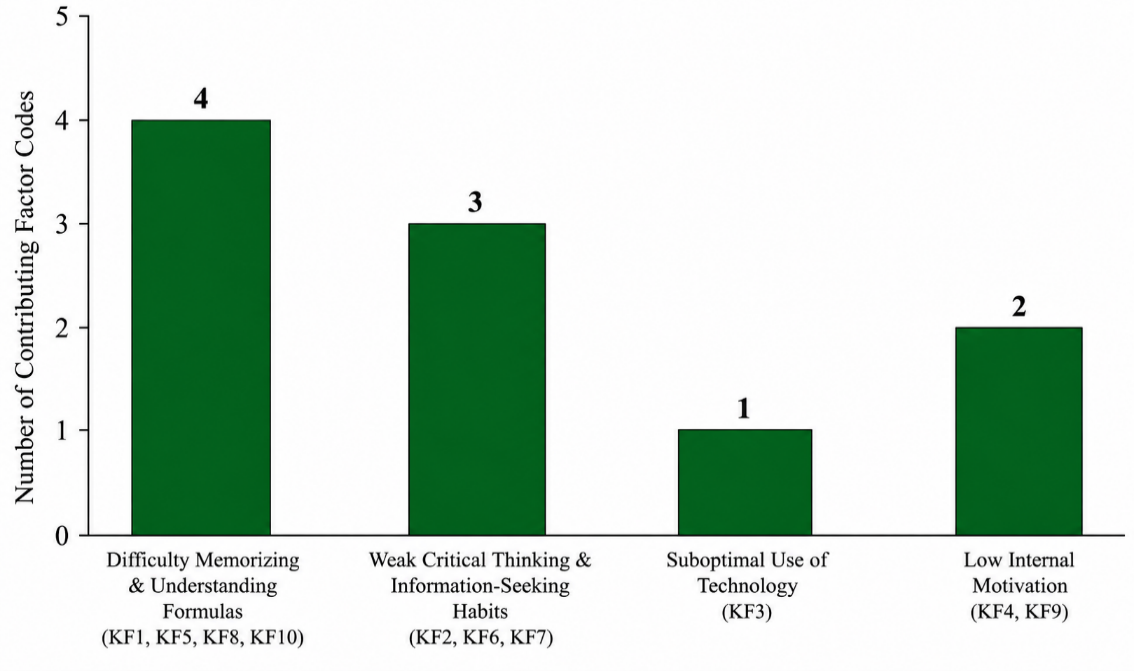
Critical thinking is a foundational competency for mathematical problem-solving, yet Indonesian students continue to perform below international benchmarks such as PISA and TIMSS. Although prior studies have examined factors associated with weak mathematical critical thinking, few have explored the phenomenon directly through students’ own lived experiences using a hermeneutic phenomenological design, and fewer still have paired thematic analysis with generative artificial-intelligence assistance such as ChatGPT to support systematic coding. This study aimed to identify the factors underlying students’ low critical thinking skills in mathematics learning and to uncover the solutions students themselves proposed to overcome these barriers. A qualitative hermeneutic phenomenological approach was employed, using ChatGPT-assisted thematic analysis across six analytic tables covering factor codes, solution codes, categories, and themes. Participants were ten Grade XII students (nine female, one male; aged 16–17 years) at a public senior high school in West Lombok Regency, Indonesia, selected through purposive sampling because they had been identified as experiencing persistent difficulty with mathematical critical thinking. Data were collected through an open-ended questionnaire and analyzed following six phases of thematic analysis. The findings revealed four major factor themes: difficulty memorizing and understanding formulas, weak habits of critical thinking and information-seeking, suboptimal use of technology, and low internal motivation. Correspondingly, students proposed four solution themes centered on active learning strategies, contextual and reflective learning, educational use of technology, and cultivation of internal motivation. These findings suggest that mathematics teachers should adopt active, contextual, and technology-integrated pedagogies, supported by ongoing professional development, so that critical thinking is nurtured as a core learning outcome rather than a byproduct of content mastery.
Downloads
References
Anisa, S., Ginashantika, E., Sudirman, S., & Olivero-Acuña, R. R. (2025). Students lived experiences with technology in mathematics learning: a hermeneutic phenomenological study in Indonesian secondary education. International Journal of Mathematics and Sciences Education, 3(1), 43–56. https://doi.org/10.59965/ijmsed.v3i1.180
Anwar, Y. A. S., & Muti’ah, M. (2022). Exploration of critical thinking and self-regulated learning in online learning during the COVID-19 pandemic. Biochemistry and Molecular Biology Education, 50(5), 502–509. https://doi.org/10.1002/bmb.21655
Arslan, R., Gulveren, H., & Aydin, E. (2014). A research on critical thinking tendencies and factors that affect critical thinking of higher education students. International Journal of Business and Management, 9(5), 43 – 59. https://doi.org/10.5539/ijbm.v9n5p43
Arsyad, M., Lestari, S. R., Sari, M. S., & Rohman, F. (2023). Construction of structural correlation of quantitative literacy and critical thinking, and factors affecting them in students of pre-service biology teachers. Eurasia Journal of Mathematics, Science and Technology Education, 19(10), 1–15. https://doi.org/10.29333/ejmste/13651
Braun, V., & Clarke, V. (2006). Using thematic analysis in psychology. Qualitative Research in Psychology, 3(2), 77–101. https://doi.org/10.1191/1478088706qp063oa
Dangal, M. R., & Joshi, R. (2020). Hermeneutic phenomenology: Essence in educational research. Open Journal for Studies in Philosophy, 4(1), 25–42. https://doi.org/10.32591/coas.ojsp.0401.03025d
Darcie, I., Gray, R., & Vander Kloet, M. (2024). Sustaining critical minds: How classroom learning cultures shape student thinking dispositions and practices. Active Learning in Higher Education. https://doi.org/10.1177/14697874241303508
Ennis, R. H. (2016). Critical thinking across the curriculum: A vision. Topoi, 37(1), 165–184. https://doi.org/10.1007/s11245-016-9401-4
Efwan, N. S., Afriansyah, E. A., Luritawaty, I. P., Arwadi, F., & Yadav, D. K. (2024). The level of students’ mathematical creative thinking skills as measured by their self-confidence. International Journal of Didactic Mathematics in Distance Education, 1(2), 125–136. https://doi.org/10.33830/ijdmde.v1i2.9355
Espina, J. I. (2022). The effectiveness of critical evaluation and questioning techniques to increase students’ critical thinking skill: A case study. Journal of Education, Language Innovation, and Applied Linguistics, 1(1), 1 – 9.
Facione, P. A. (2015). Critical thinking: What it is and why it counts. Measured Reasons LLC.
Fenanlampir, A., Rafafy Batlolona, J., & Imelda, I. (2019). The struggle of Indonesian students in the context of TIMSS and PISA has not ended. International Journal of Civil Engineering and Technology, 10(2), 393–406. https://iaeme.com/Home/article_id/IJCIET_10_02_042
Geng, H. (2021). Redefining the role of teachers in developing critical thinking within the digital era.
Harandi, S. R. (2015). Effects of e-learning on students’ motivation. Procedia - Social and Behavioral Sciences, 181, 423–430. https://doi.org/10.1016/j.sbspro.2015.04.905
Häusler, J., Gartmeier, M., Grünewald, M. G., Hapfelmeier, A., Pfurtscheller, T., Seidel, T., & Berberat, P. O. (2024). Too much time or not enough? An observational study of teacher wait time after questions in case-based seminars. BMC Medical Education, 24(1), 690 – 712. https://doi.org/10.1186/s12909-024-05667-w
Ichsan, I., Suharyat, Y., Santosa, T. A., & Satria, E. (2023). Effectiveness of STEM-based learning in teaching 21st century skills in Generation Z student in science learning: A meta-analysis. Jurnal Penelitian Pendidikan IPA, 9(1), 150–166. https://doi.org/10.29303/jppipa.v9i1.2517
Jalali, M. S., & Akhavan, A. (2024). Integrating AI language models in qualitative research: Replicating interview data analysis with ChatGPT. System Dynamics Review, 40(1), e1772. https://doi.org/10.1002/sdr.1772
Kravchenko, O., Dokuchaieva, V., Valentieva, T., Sbitnieva, L., & Chornobryva, N. (2023). The use of technology-based model of critical thinking development to reshape students’ self-study process. European Journal of Educational Research, 12(1), 281–296. https://doi.org/10.12973/eu-jer.12.1.281
Liu, Y., & Pásztor, A. (2022). Effects of problem-based learning instructional intervention on critical thinking in higher education: A meta-analysis. Thinking Skills and Creativity, 45, 101069. https://doi.org/10.1016/j.tsc.2022.101069
Michael, B., Arthur, Y. D., & Asare, B. (2025). Influence of peer learning, self-regulatory learning, and mathematics interest on mathematics performance. International Journal of Didactic Mathematics in Distance Education, 2(1), 105–116. https://doi.org/10.33830/ijdmde.v2i1.10313
Mellawaty, M., Sukestiyarno, Y., Zaenuri, Z., & Isnarto, I. (2023). Level of critical thinking of junior high school students in solving mathematical problems. Polyhedron International Journal in Mathematics Education, 1(1), 53–61. https://doi.org/10.59965/pijme.v1i1.1
Morgan, D. L. (2023). Exploring the use of artificial intelligence for qualitative data analysis: The case of ChatGPT. International Journal of Qualitative Methods, 22. https://doi.org/10.1177/16094069231211248
Najiyah, S. S., & Mahmudah, W. (2025). Analisis kemampuan berpikir kritis siswa dalam menyelesaikan soal cerita SPLDV ditinjau dari gaya berpikir. Kognitif: Jurnal Riset HOTS Pendidikan Matematika, 5(1). https://doi.org/10.51574/kognitif.v5i1.2866
Nashori, F., Anshori, A., Aziz, R., & Wisnu Wardani, I. (2023). Tertiary English students’ learning motivation and critical thinking skills. INSPIRA: Indonesian Journal of Psychological Research, 4(1), 85–96. https://doi.org/10.32505/inspira.v4i1.5503
Neubauer, B. E., Witkop, C. T., & Varpio, L. (2019). How phenomenology can help us learn from the experiences of others. Perspectives on Medical Education, 8(2), 90–97. https://doi.org/10.1007/s40037-019-0509-2
OECD. (2010). PISA 2009 results: What students know and can do – Student performance in reading, mathematics and science (Volume I). OECD Publishing. https://doi.org/10.1787/9789264091450-en
OECD. (2019). PISA 2018 results (Volume I): What students know and can do. OECD Publishing. https://doi.org/10.1787/5f07c754-en
Rauhun, S., Indrawati, I., Samsul, B., Sudirman, S., & Olivero-Acuña, R. R. (2025). Phenomenological exploration of low conceptual understanding in mathematical story problem-solving among Indonesian Junior High School Students. International Journal of Mathematics and Sciences Education, 3(2), 93–104. https://doi.org/10.59965/ijmsed.v3i2.186
Ryan, R. M., & Deci, E. L. (2000). Self-determination theory and the facilitation of intrinsic motivation, social development, and well-being. American Psychologist, 55(1), 68–78. https://doi.org/10.1037/0003-066X.55.1.68
Safira, A. A., & Darmawan, P. (2025). Empowering students' critical thinking through the integration of statistical board teaching aids and problem-based learning. Polyhedron International Journal in Mathematics Education, 3(1), 45–54. https://doi.org/10.59965/pijme.v3i1.166
Samura, A. O., Darhim, Juandi, D., Said, A. M., Nani, K. La, & Tamur, M. (2022). Improving the critical thinking ability of junior high school students through realistic mathematics education innovation. AIP Conference Proceedings, 2621, 020057. https://doi.org/10.1063/5.0096077
Steinmayr, R., Weidinger, A. F., Schwinger, M., & Spinath, B. (2019). The importance of students’ motivation for their academic achievement — replicating and extending previous findings. Frontiers in Psychology, 10, Article 1730. https://doi.org/10.3389/fpsyg.2019.01730
Suprihatin, R. J. (2024). Fitrah-Based education as an alternative paradigm for character development in early childhood education: a narrative review. Panicgogy International Journal, 2(2), 72–82. https://doi.org/10.59965/pij.v2i2.161
Suryawan, I. P. P., Sudiarta, I. G. P., & Suharta, I. G. P. (2023). Students’ critical thinking skills in solving mathematical problems: Systematic literature review. Indonesian Journal of Educational Research and Review, 6(1), 120–133. https://doi.org/10.23887/ijerr.v6i1.56462
Susanti, N. E., & Sari, Y. I. (2021). Improving Students’ Critical Thinking Ability Through Lesson Study Activities. In 2nd Annual Conference on Social Science and Humanities (ANCOSH 2020) (pp. 161-164). Atlantis Press.
Widana, I. W. (2018). Higher order thinking skills assessment towards critical thinking on mathematics lesson. International Journal of Social Sciences and Humanities (IJSSH). https://doi.org/10.29332/ijssh.v2n1.74
Wulandari, W., Musafir, M., & Mulyono, A. (2023). The impact of broken homes on the learning motivation of students: Case study in elementary school in North Lombok, Indonesia. Panicgogy International Journal, 1(2), 57–62. https://doi.org/10.59965/pij.v1i2.148
Yulianto, D., Umami, M. R., & Mony, R. S. (2024). Fostering critical thinking and self-efficacy in mathematics students. Union: Jurnal Ilmiah Pendidikan Matematika, 12(1), 116–133. https://doi.org/10.30738/union.v12i1.16900
Downloads
Published
How to Cite
Issue
Section
License
Copyright (c) 2026 Susi Sulasti, Naif Mastoor Alsulami, Muhamad Galang Isnawan, Farah Heniati Santosa, Ronaldo Rafael Olivero-Acuña, Denilsón Andrés Silgado-Tuñón

This work is licensed under a Creative Commons Attribution-ShareAlike 4.0 International License.